April 25, 2013

RIGHT AND WRONG

When Bankei held his seclusion-weeks of meditation, pupils from many parts of Japan came to attend. During one of these gatherings a pupil was caught stealing. The matter was reported to Bankei with the request that the culprit be expelled. Bankei ignored the case.

Later the pupil was caught in a similar act, and again Bankei disregarded the matter. This angered the other pupils, who drew up a petition asking for the dismissal of the thief, stating that otherwise they would leave in a body.

When Bankei had read the petition he called everyone before him. “You are wise brothers,” he told them. “You know what is right and what is not right. You may go somewhere else to study if you wish, but this poor brother does not even know right from wrong. Who will teach him if I do not? I am going to keep him here even if all the rest of you leave.”

A torrent of tears cleansed the face of the brother who had stolen. All desire to steal had vanished.

-Zen story

Photo source: sea of sunflowers! (Daisetsuzan National Park, Japan)

April 25, 2013

DEVELOPING CONTROL

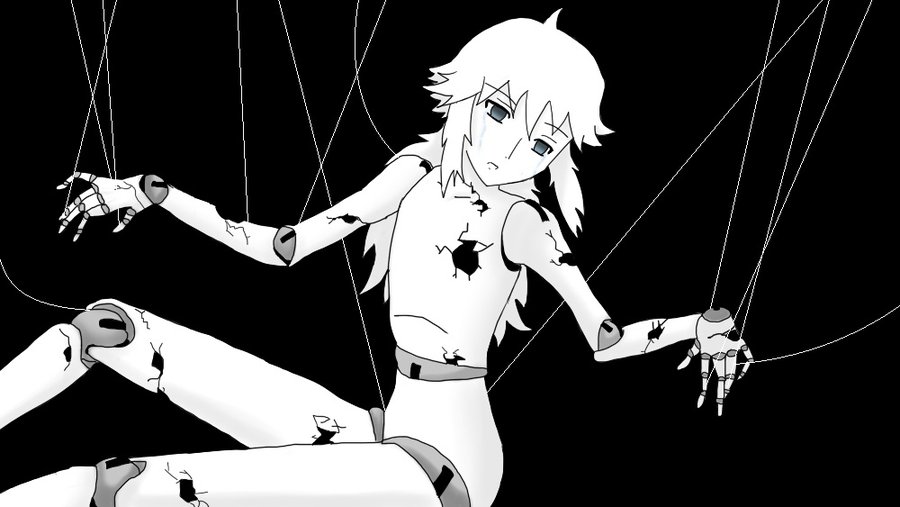
Rumi’s Sufi teachings focus on developing control. Consider this teaching:

“Words , in themselves, are of no importance. You treat a visitor well, and speak a few kind words to him. He is happy. But if you treat another man to a few words of abuse, he will be hurt. Can a few words really mean happiness or sadness? These are secondary factors, and not real ones. They affect people who are weak.”

This reminds me of the childhood saying, “sticks and stones may break my bones, but words will never hurt me!” As much as one may believe this to be true, actually living these words can be a different matter. Somewhere along the line, I believe we somehow learned to seek validation from others. We allowed words to gain power over our moods and behaviors. We gave up our control over ourselves and instead gave in to constantly changing emotions…feeling up when someone says something positive about us…and down when we receive some criticism.

Building inner strength really means developing control over yourself. Knowing who you really are means becoming less sensitive to the words, emotions, and opinions of everyone else…to temper your own reactions to be more measured and less reactive.

So, can a few words really mean happiness or sadness? Only if you let them.

Photo source: cut the strings!


April 24, 2013

THE MOON AND THE THIEF

A Zen Master lived the simplest kind of life in a little hut at the foot of a mountain. One evening, while he was away, a thief sneaked into the hut only to find there was nothing in it to steal. The Zen Master returned and found him. “You have come a long way to visit me,” he told the prowler, “and you should not return empty handed. Please take my clothes as a gift.”

The thief was bewildered, but he took the clothes and ran away. The Master sat naked, watching the moon. “Poor fellow,” he mused, ” I wish I could give him this beautiful moon.”

Photo source:the eye of the Moon (Arches National Park, Utah)

April 23, 2013

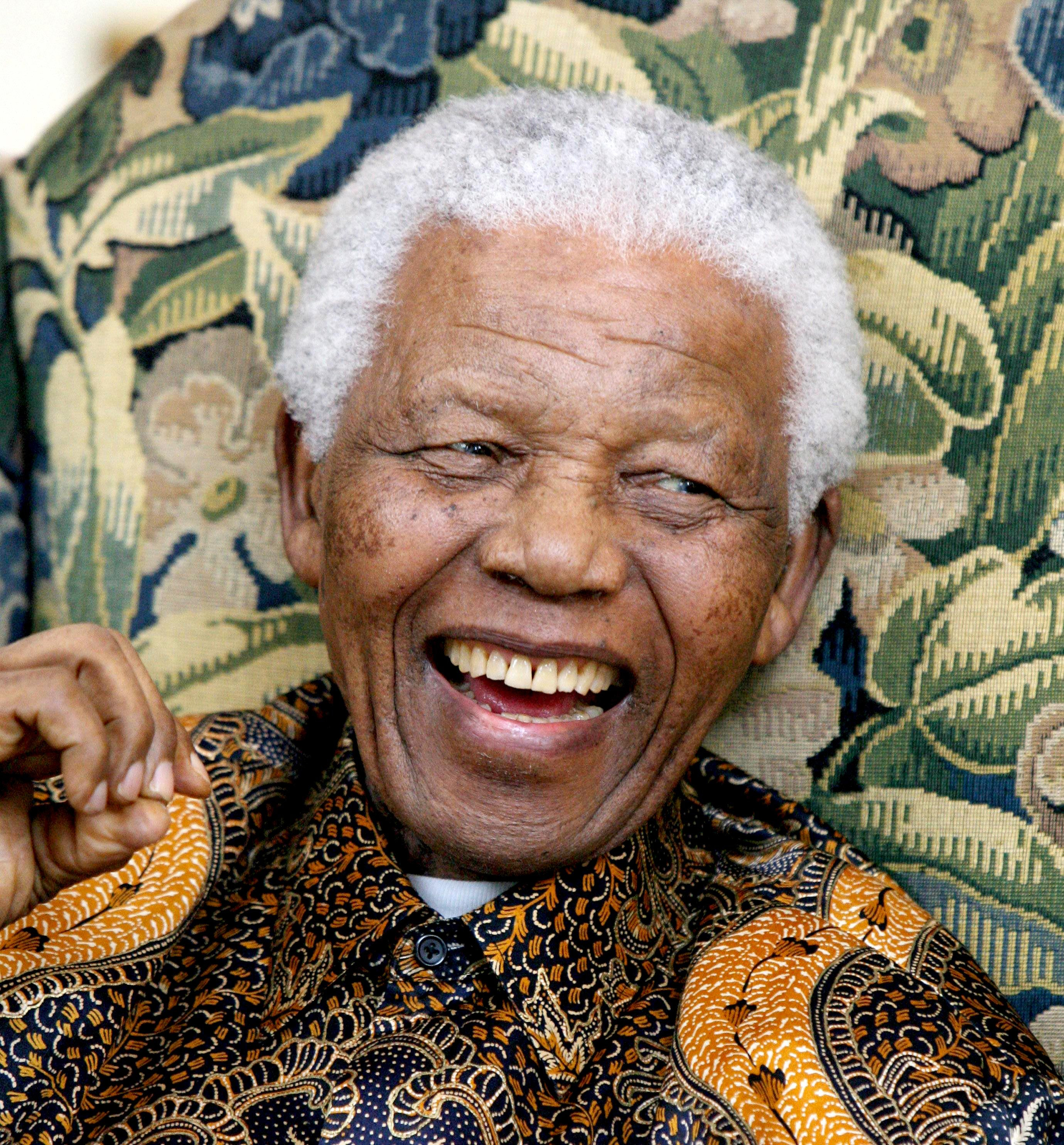
NELSON MANDELA

Nelson Mandela (1918-present: aged 94) was the first black President of South Africa (1994-1999) and a hugely inspiration figure. After serving 27 years in prison, he somehow managed to keep his sense of purpose (and humor later saying, “In my country, we go to prison first and then become President”!) to abolish apartheid and establish the first multi-racial elections in 1994.

Mandela was awarded the Nobel Peace Prize in 1993, and became President of South Africa in 1994. He formed a Government of National Unity to end racial segregation; and he established a new constitution and formed the Truth and Reconciliation Committee to investigate past human rights abuses, while introducing policies to encourage land reform, combat poverty and expand healthcare services. Though Mandela declined to run for a second term, he continued his charitable work, focusing especially on combating poverty and HIV/AIDS through the Nelson Mandela Foundation.

Mandela is held in deep respect around the world, and, in South Africa he is known as the “Father of the Nation.” Though the lessons of wisdom and resiliency that one could capture from a study of Nelson Mandela are numerous, this quote is perhaps one of my favorite at getting to the root of his ultimate struggle and victory over apartheid in South Africa:

“No one is born hating another person because of the color of their skin, or his background, or his religion. People must learn to hate, and if they can learn to hate, they can be taught to love, for love comes more naturally to the human heart than its opposite.”

Photo source: Nelson Mandela 

April 22, 2013

THE REALIZATION OF LOVE

“It makes no difference how deeply seated may be the trouble, how hopeless the outlook, how muddled the tangle, how great the mistake. A sufficient realization of love will dissolve it all.” -Emmet Fox

I appreciate the imagery of a cave, for I feel it represents a feeling of being trapped or imprisoned. So many people live in this place…in a self-made cave, frozen in place and afraid to leave…unaware of the beauty and love that truly surrounds them. It is not possible for another to extinguish your light or take away your joy…only you can do that.

When we remove these faulty barriers, break down our self imposed limitions, and decide to move past whatever trouble we are holding onto, we open ourselves to unimaginable beauty and open ourselves to the freedom and love that has been there all along.

Photo source: beauty seen from within (Spain)

April 22, 2013

THE WAYWARD PRINCESS

A certain king believed that what he had been taught, and what he believed, was right. In many ways he was a just man, but he was one whose ideas were limited.

One day he said to his three daughters, “All that I have is yours, or will be yours. Through me you obtained your life. It is my will which determines your future, and hence determines your fate.”

Dutifully, and quite persuaded of the truth of this, two of the girls agreed. The third daughter, however, said, “Although my position demands that I be obedient to the laws, I cannot believe that my fate must always be determined by your opinions.”

“We shall see about that,” said the king.

He ordered her to be imprisoned in a small cell, where she languished for years. Meanwhile, the king and his obedient daughters spent freely of the wealth which otherwise would have been expended upon her.

The king said to himself, “This girl lies in a prison not by her own will, but by mine. This proves, sufficiently for any logical mind, that it is my will, not hers, which is determining her fate.”

The people of the country, hearing of their princess’s situation said to one another, “She must have said or done something very wrong for a monarch, with whom we find no fault, to treat his flesh and blood so.” For they had not arrived at the point where they felt the need to dispute the king’s assumption of rightness in everything.

From time to time the king visited the girl. Although she was pale and weakened from her imprisonment, she refused to change her attitude.

Finally the king’s patience came to an end. “Your continued defiance,” he said to her, “will only annoy me further, and seem to weaken my rights, if you stay within my realms. I could kill you; but I am merciful. I therefore banish you into the wilderness adjoining my territory. This is a wilderness, inhabited only by wild beasts and such eccentric outcasts who cannot survive in our rational society. There you will soon discover whether you can have an existence apart from that of your family; and, if you can, whether you prefer it to ours.”

His decree was at once obeyed, and she was conveyed to the borders of the kingdom. The princess found herself set loose in a wild land which bore little resemblance to the sheltered surroundings of her upbringing. But she soon learned that a cave would serve for a house, that nuts and fruits came from trees as well as golden plates, that warmth came from the Sun. This wilderness had a climate and way of existing on its own.

After some time she had so ordered her life that she had water from springs, vegetables from the earth, fire from a smoldering tree.

“Here,” she said to herself, “is a life whose elements belong together, form a completeness, yet neither individually nor collectively do they obey the commands of my father the king.”

– Read More –

Newer Posts
Older Posts
Translate »