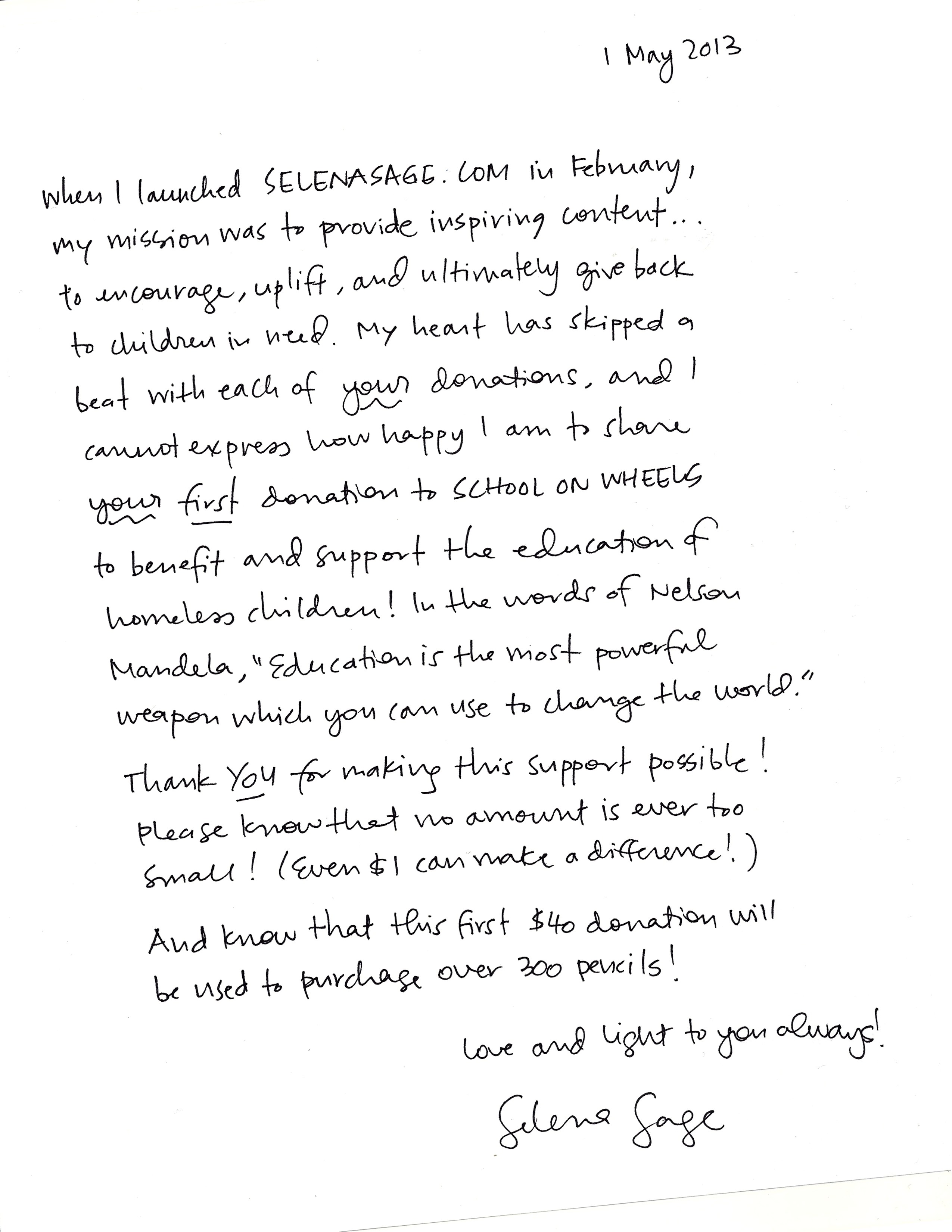

Every donation you provide is greatly appreciated!
You can donate by clicking here: Give Back.
Thank you! :)

Every donation you provide is greatly appreciated!
You can donate by clicking here: Give Back.
Thank you! :)

Normally, I allow the Zen or Sufi stories I post to stand alone without commentary. However, I feel the previous Zen story (A Game of Chess) carries with it many important lessons beyond just compassion and concentration. The less obvious lesson that I would like to point out stems from the master’s comment to the prince to “go hug your chess opponent who made [the lessons] possible.”
This comment is so subtle, yet it carries such weight. In its essence, it is a reminder that our “enemies” are our greatest teachers. Merely perceiving another as your enemy creates a sense of separation…a departure from the oneness that is true. And even more basic than that is the reality that an enemy is someone that shows us our own weakness. Learning to have more control over ourselves, and not be swayed and in constant turmoil because of the words and actions of another, is true strength.
We learn what we’re really made of not when everything is going well, but when things are not. Our weakness (lack of self control) is shown in moments of anger and rage…when we allow the words or actions of another to disturb our inner peace. How could we know that we had that within us if not for our opponents? We can measure our growth by our ability to remain calm in the face of those same persons or situations that once caused great internal (and possibly external) disruption. The calm comes not from ignoring what is happening, but from an understanding of what is really important. We learn to ignore the unnecessary drama and focus our attention on actions that must be taken to address real challenges.
So when you are able to infuse concentration and compassion when facing an opponent, your Self has scored a victory over your self. Therefore, I say checkmate! ;)
Photo source: checkmate
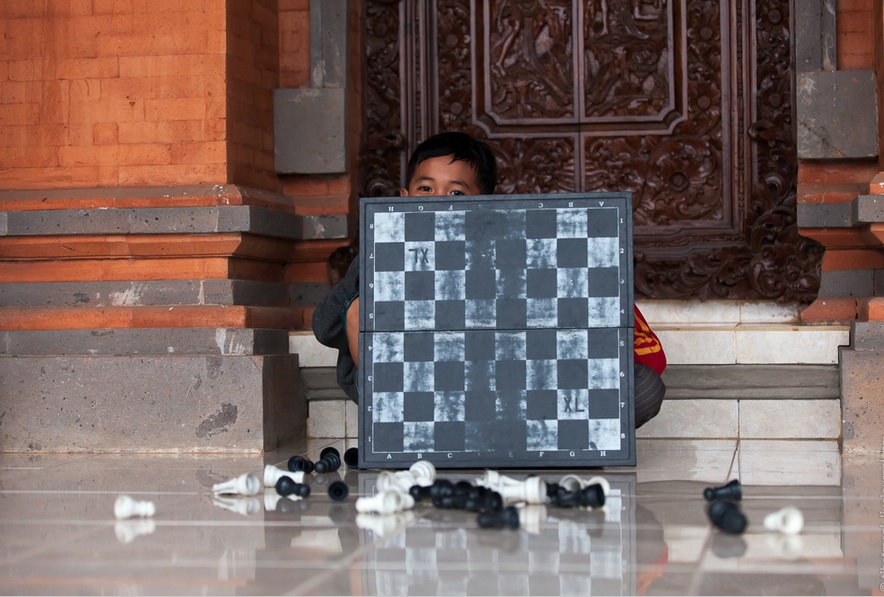
A prince goes to a Zen master and tells him that he wants to be enlightened—and now! Instead of sending him away, the master says it could be arranged. After finding out from the prince that he plays chess very well, the master sets up a game between the visitor and one of his monks who has just a passing knowledge of chess.
The condition is: whoever loses will be beheaded. Predictably, the prince starts dominating the game. Soon, however, his conscience starts to prick: “I had come to this monastery for a selfish purpose, but now I may become the cause of this poor monk’s death.” So, feeling compassionate, he deliberately starts playing badly.
But playing well was second nature to him, playing badly needs his entire attention. Neither does he want to play too bad a game to make his real move obvious. His nerves stretched, soon he starts sweating profusely. After some time, the master stops the game.
“The first lesson is over,” he tells the prince. “You learned two things today: compassion and concentration. Now go and hug your chess opponent who made it possible.”
-Zen story
Photo source: chess :)
DEAR SAGE: I am writing to you from Europe! A mutual friend of ours introduced me to your lovely site and I so enjoy reading your content! Thank you for this gift you share with us all. I love that you speak so much about forgiveness and I’m writing to you because even though I’m 40+, I am still receiving counselling regarding ill feelings about my parents…especially regarding their behaviours during my teenage years. I’m educated with a successful career and know that I should be over this but I can’t seem to work through it. I thought I’d give it a go and message you for your thoughts on how I can forgive them and remove this blockade. Cheers!
DEAR TRYING-TO-FORGIVE-MY-PARENTS: Thank you so much for your support from across the world! I’m delighted to have you as a part of the SelenaSage family and I really appreciate you taking the time to submit such an excellent question! Working through feelings and emotions about parenting really does lie at the heart of so many things. It is an important topic and one that I’m happy to provide my insights! Though, please allow me to say, I have great respect for the counseling and coaching professions and make no attempt here to override any advice you may be receiving. My disclaimer is only to attempt to help you view the situation from a different perspective, but I am in full support of you receiving any kind of care you feel appropriate. With that said, let’s begin!
The first point that I believe must be realized is that there are no perfect parents…and there are no perfect children. Please let that statement sink in for a minute because the implications are huge. (As you may know, this site is dedicated to abused and homeless children, so this in no way gives abusive parents a pass. I believe those situations require immediate intervention for the safety of the child.) What I mean here is that even though there are thousands of books written about parenting, the experience is always individual and bound to be imperfect. Can you say that you did absolutely everything right as a child? And furthermore, that you’ve never made any missteps as an adult? This would be unreasonable to expect! Similarly, parents have a tough job…trying to balance the challenges of everyday life while still caring for, supporting, and nurturing a child. Not everyone is as capable of this as others (not to say that parenting is a competition, but there are many factors which influence success as a parent). We don’t get to choose our parents, so this is just a reality that must be accepted. What matters is how you choose to deal with the reality that is your life.
So, without even going into the details of your parents’ behaviors, I just want to point out that your ill feelings date back to your teenage years and you’ve disclosed that you are 40+. You are clearly educated and intelligent (especially if we share mutual friends!) and have found ways to advance your success in many areas of your life despite whatever happened as a teenager. But whatever you are holding onto from being a fifteen year old (to average the teenage years) is controlling you emotionally over 35 years later!
Therefore, you have one basic choice to make: you can either continue to discuss what happened over and over again and try to figure out why why why…or you can leave the past where it belongs (in the past) and focus all of your energy and attention on the present. This sounds really simple…and that’s because it is. Many therapists would probably disagree with this and supply other strategies, but I believe your reality is created by what you focus on. And even if you figure out the why, will that really make it better? As stated in a recent post, if you keep focusing on that event, you give it energy and attention that can take over your life and creep into your dreams. If you question your own memories and thoughts (please read this post about the inquiry method for healing), and stop believing everything you think you can create a new reality for yourself. You can change your whole frame of mind and take personal responsibility for the person you choose to be right now. You ultimately decide how you want to live your life…and that is up to you, not anyone else. – Read More –

I really appreciate this analysis of illusion and suffering from a Sikh perspective by Guru Nanek:
Man, says the Guru, is led astray by Maya, or illusion. The world itself is real enough; its unreality is mirrored only from the way in which man looks at it. Thus, when man begins to see God within himself, in others and in the whole world about him, he breaks the bonds of illusion; and gains peace of mind.
Man suffers for two reasons; first because he either did not appreciate God’s creation or he has chosen to forget His existence; secondly, his mind is not under control with the result that it is fixed on worldly pleasures, wealth, power, and self-indulgence. He is then led into an endless chain of actions which are not according to the ways of God, but properly consist of sin and selfishness, for which he has to pay the price in misery and suffering. The farther he remains from God, the more he suffers.
—-
Photo source: maya

If I’m going to have forgiveness, who am I going to have it from? Myself. But every time I forgive myself for something, I’m remembering what it was. And every time I remember what it was, I put some more of my energy into it. So it seems to get bigger and doesn’t go away.
So, although I say, “Okay, I forgive myself,” the next time I see the person that I got angry with, up comes the anger again.
So we have to do something more than forgive it. We actually have to forget it. We have to live our lives in this moment to such completeness that when one moment disappears, there’s no evidence that we were in that moment.
If there’s no evidence, there’ll be no thought, no feeling, no imagination, and no physical reality, and the unconscious will be clear.
Do you know what happens when those levels clear themselves? We automatically move very deep inside ourselves into the Soul, wherein the Christ and God, the divine spiritual energy, the Holy Spirit, the Holy Ghost, resides and lives.
– Excerpt from Forgiveness: The Key to the Kingdom by John-Roger
Photo source: renewal (Yosemite)
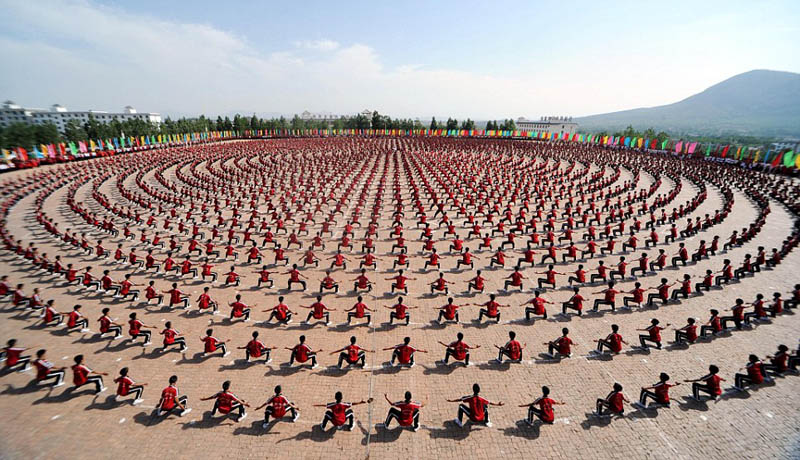
A martial arts student went to his teacher and said earnestly,
“I am devoted to studying your martial system. How long will it take me to master it.”
The teacher’s reply was casual, “Ten years.”
Impatiently, the student answered, “But I want to master it faster than that. I will work very hard. I will practice everyday, ten or more hours a day if I have to. How long will it take then?”
The teacher thought for a moment, “20 years.”
-Zen story
—
I found that in my own practice of martial arts, I experienced many moments when I wished I could learn new moves automatically. I would have an issue of being impatient with myself…wanting to be able to perform perfectly without practice. This is not realistic nor is it the process of true learning. We often neglect to give ourselves time to learn or progress naturally. When we try to rush things, we become rigid and set ourselves back instead of allowing things to move forward naturally. In effect, we double the necessary time to reach mastery.
I am also reminded of Malcolm Gladwell’s book, Outliers, in which he makes a study of a number of successful people. What Gladwell finds is that the success these individuals found (from Steve Jobs to the Beatles) was a combination of timing and practice. More specifically, these successful people obtained 10,000 hours of practice in their chosen area before achieving mastery. What transpired after that time was a result in having the right opportunity present itself (as the saying goes, luck is when preparation meets opportunity!).
Therefore, be patient with yourself and understand that mastery takes time, discipline, and practice. If you are willing to remain diligent and patient, the universe will afford you with the right opportunity to match your level of preparation!
Photo source: Kung Fu (China)