
January 5, 2014

EVERYTHING IS HAPPENING FOR YOUR HIGHEST GOOD

Sometimes it can be hard to believe that everything is happening for your highest good. It is easy to categorize some things as ‘wins’…and others as ‘losses’. We make judgements about ourselves and determine if we made a ‘right’ or ‘wrong’ decision. We reflect on injustices that have occurred in our lives and wonder, “Why me?” and “How could that have possibly been for my highest good?” To suffer that pain…how could that have been a good thing?

The reality is that the pain is momentary. The suffering we endure is a result of how we continually process the pain. We replay the story again and again in our minds and increase our attachment to the pain. The pain becomes our story. The pain becomes us. We become the pain.

The poisonous pain…which is playing out in the mind…takes over the body. In sadness, we lose control of ourselves and drink the poisonous past and needlessly stress over the uncertain future. Both are (painfully and fortunately) out of our control, but the mind…the ego…convinces us that if we concentrate on it a little longer, we can figure it all out. We can make sense of it. We can fix it.

The truth is that the only thing we can fix is our focus. As long as we dwell in the past or the future, we miss the beauty of the present moment. When we allow ourselves to be depressed about things that have already happened…or have anxiety over things that haven’t happened yet, we miss the whole point. The point is unfolding right now. We can only see that if we accept that everything that happened could not have happened another way.

Now, what would happen if we chose to believe in a benevolent Creator? A Creator that, in compassion, exposed us to hardships and trials to steel us and bring us closer to our purpose? What if we recognized that through that trial, we grew stronger and may be better able to help others grow from that situation? Or that our purpose is really to eradicate that condition entirely? In such a case, perhaps this purpose could only come from that painful experience…and that the intention behind the lesson was to have us live our learned truth in this moment.

What if we understood that the decision may have looked like a ‘wrong’ decision…but that it led to something beautiful? Or that the ‘loss’ was actually a ‘win’ in disguise? Perhaps that experience was necessary to help you understand something about yourself…life…or the Oneness that permeates. Maybe it was the missing puzzle piece needed to unlock enlightenment and understand what all of ‘this’ really is about.

I think the problem is that we hold on to the pain and miss the lesson. We focus on the loss but miss the blessing. We misunderstand and think that when a person leaves this Earthly plane that they are gone forever. We cannot see their spirit hovering above us through our tears…so we don’t communicate with them and we don’t understand when we are surrounded by their love.

When I consider the past, I am always reminded of the Biblical story of Lot in Genesis Chapter 19. In this Chapter, God destroys the evil cities of Sodom and Gomorrah…but spares Lot and his family, since Lot kindly sheltered angels at personal risk. As the morning dawns on the day of destruction, the angles urge Lot to take his family out of the city to be saved. They tell Lot, Do not look back or stop anywhere in the valley. Escape to the hills, lest you be swept away.”  The family flees Sodom, but as the cities are being destroyed, Lot’s wife looks back and is turned into a pillar of salt.

To me, Lot’s wife turning into salt is a metaphor for how we can destroy ourselves by looking back. By stopping in the valley of our pain, we miss the freedom that lies so near in the hills. We are weighed down unnecessarily by the burdens of the past that we continue to try to carry. We refuse to see things as they actually are…instead we dwell in a false world of how we want things to be or how we believe things should have been. By not accepting that things are unfolding for our highest good, we miss the silver lining and the power of choice that we are able to exercise in each situation. Even when things are completely out of our immediate control, we do get to control our reaction to the situation. We get to decide to forgive someone who may have harmed us…to try again on a professional endeavor that may not have worked out…to move on from a relationship that is withdrawing positives and depositing negatives…and on and on.

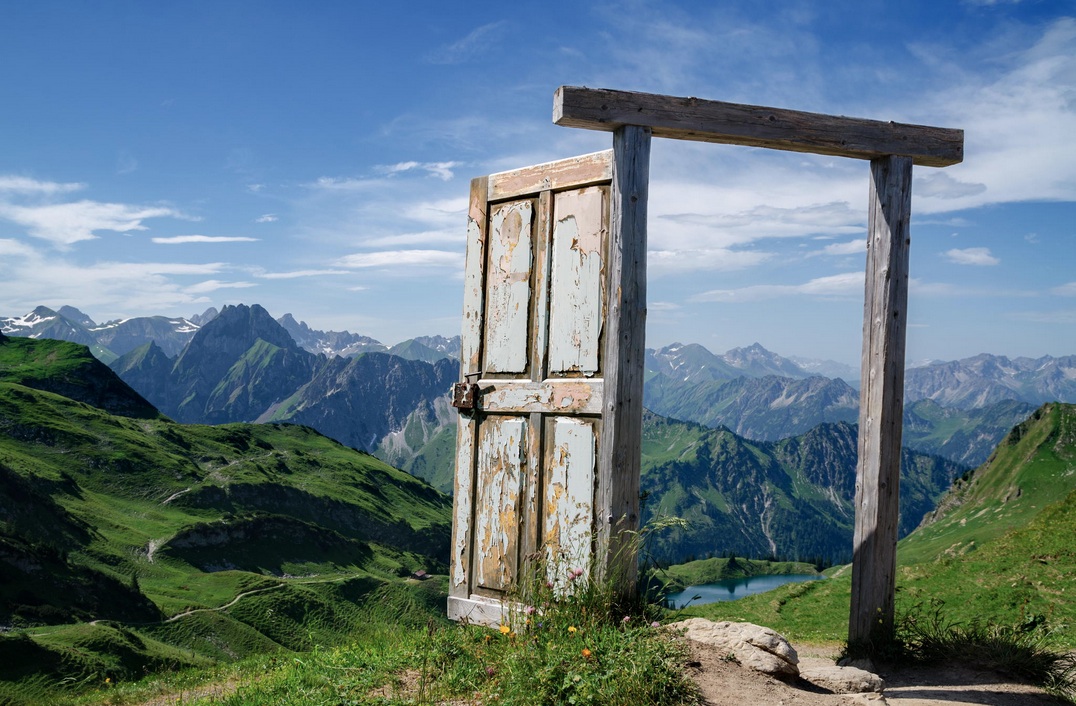
As we choose to let go, accept that what happened was for our highest good, understand that what will happen will be for our highest good, and mindfully focus on the present moment, we find peace. The door is there….we just have to shed past and future concerns to walk through it :)


Photo source: Still Standing by Dominic Walter
January 4, 2014

MINDFULNESS HEALS

Before leaving for the gym today, I decided to grab my Jan 2014 copy of Prevention magazine on impulse. [I’m not so good at reading all of the magazines I subscribe to…I’m resolving to go through ‘the pile’ and give away issues after I read them! haha…but I’m really glad I grabbed this one today.] I read the “Life Lessons” story and was speechless after reading it…so much so that I’ve decided to just go ahead and type the whole story and share it with you :)

The Healer

When she left her career as a medical doctor, Sister Dang Nghiem, MD, a Zen Buddhist nun and disciple of Thich Nhat Hanh, learned the true meaning of healing.

by Siobhan O’Connor

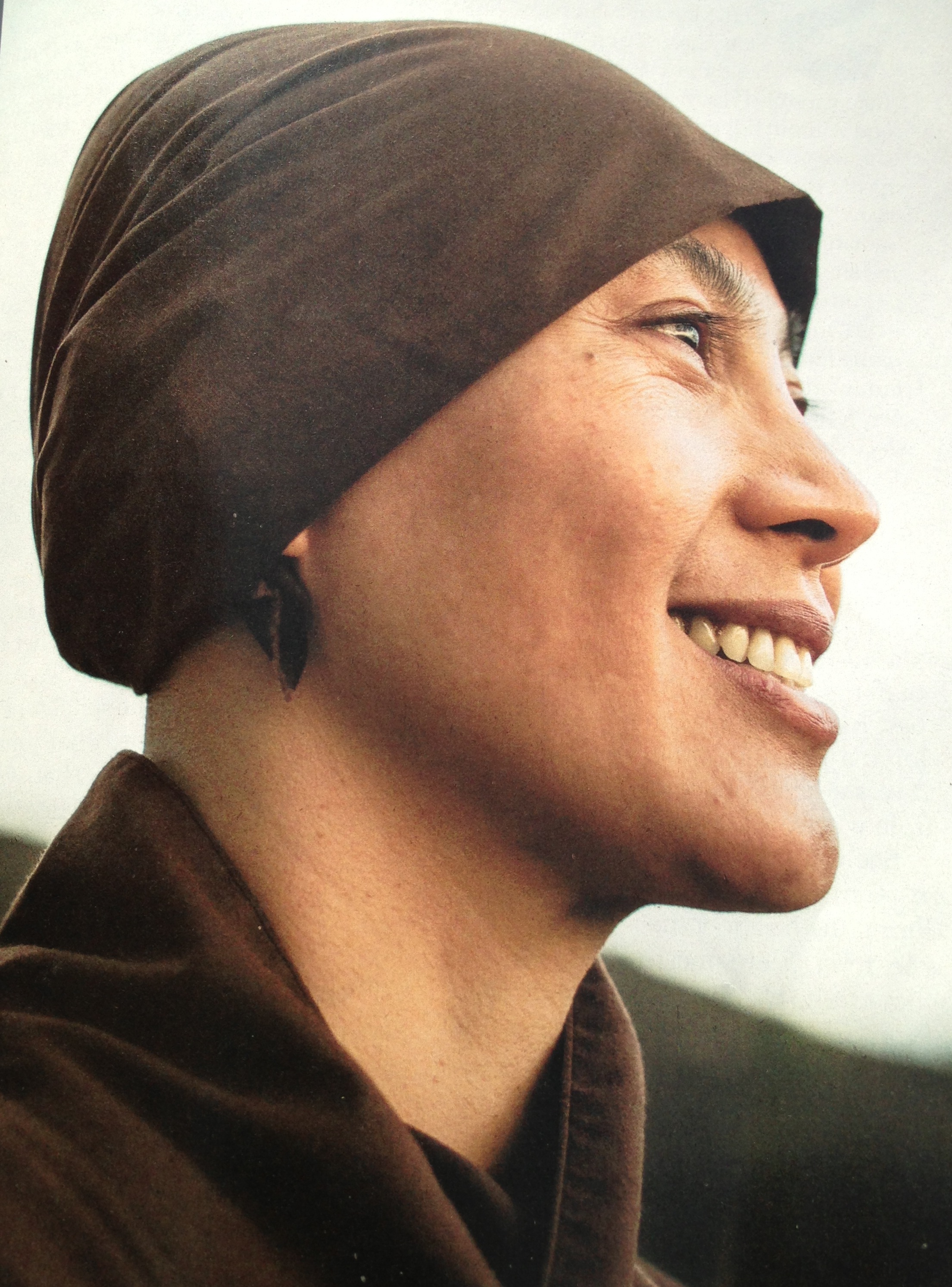
Sitting cross-legged on the floor of a meditation room at Blue Cliff Monastery in New York State, Sister Dang Nghiem, 45, has the enviable air of a person who can (and does) sit still for hours on end without fidgeting. It’s not just because she wears obvious markers of a monastic Buddhist life — the shorn hair, the brown robes. It’s that Sister D has a kind of radiant inner calm that you can only imagine she was born with. Except she wasn’t.

Fourteen years ago, Sister D barely even meditated. She answered to the name Huynh Thi Ngoc Huong and was a family physician who lived with her partner, John, in San Francisco. She’d known since she was a little girl that she wanted to dedicate her life to helping others. So after emigrating from Vietnam to the United States when she was 16, and then graduating from the University of San Francisco, Medical School, she seemed, on the face of things, to have it all: a best friend and lover in John; a prestigious job. It was a long, long way from where she’d come.

She was born in 1968 in Central Vietnam during the height of the war to a Vietnamese woman who was in and out of her life. She never knew who her father was but was told he was a US soldier. For much of her childhood, Sister D had to fend for herself, facing verbal, physical, and sexual abuse from relatives, though she took solace in her grandmother, whom she adored.

Her grandmother wanted Sister D and her younger brother to be the first in their family to go to college, and in 1985 — because of a stipulation in the Amerasian Immigration Act allowing children of US and Vietnamese citizens to apply for American citizenship — she moved the children into foster care in the United States. By the time Sister D started medical school, she and her brother had been shuffled through five different foster homes.

In September 1999, Sister D was officially an MD. The circumstances of her life bore no resemblance to those of her troubled youth, but the feelings, the depression she’d struggled with since childhood, still dogged her. She’d been pushing John away, steeling herself from him when the sadness hit, which was often. Just before her 31st birthday, John suggested they take a trip to the coast to celebrate. She told him she wanted to be alone, so he took the trip solo. A couple of days later, on the morning of her birthday, Sister D was on call at the hospital when she got word that John had drowned. That was her last day as a doctor.

The pain of John’s sudden death was unbearable, and it forced her to look inward.  “When the healer is not healed,” Sister D says now, “when she is wounded herself, she cannot really care for others.”

If she was going to be able to help other people, she thought, first she would have to face her own difficult past: “All my life I thought that if I became very successful, if I found a loving partner, then that would make up for everything I lost of never had as a child. But I wasn’t happy, because I didn’t know how to handle my past.”

Just weeks before John’s death, Sister D had attended a 5-day mindfulness retreat with Thich Nhat Hanh, a well-kn0wn and respected Zen master. In her memoir, Sister D recounts how John first introduced her to the concept of mindfulness — of living in the present moment through meditation and by focusing on the breath. She’d absorbed some of that by being around John, but after this immersion with Nhat Hanh, something shifted inside her. “It showed me that there are concrete practices,” she says. “There is a path, there is a way of life that I can practice, and it can help heal me.” So while she would not return to her job as a doctor, she decided to focus, at least for a little while, on healing herself and others by learning and teaching mindfulness. She packed up her life and moved to Nhat Hanh’s Plum Village monastery in Southern France.

That was 14 years ago, she now resides at Blue Cliff, another of the Zen master’s centers. “I stopped being a doctor, but I continue to be a physician–I just don’t prescribe drugs,” she says. “And to anyone who comes to me, I transmit by whole energy of mindfulness. Now the healer, the healed, and the healing process are not three separate entities.”


Here’s what else she knows now…


Breathing heals; time doesn’t.

It’s a myth to say that time can heal. Time cannot heal. Breathing and mindfulness can. [Long after a traumatic event happens to you,] a sight, a sound, a smell, a taste, a touch can trigger the complete stress response as though it’s happening all over again. What saved me was the mindfulness of breathing. Sometimes I would lie down to breathe and put my hands on my belly to slow it down and anchor my body. Through breathing, you learn to slow the stress response, the fight-flight-or-freeze response. If you can do that when going through a very intense experience, the next time you recall that trauma, you will do so with more peace, mindfulness, and clarity.


you can cultivate joy even when you’re hurting.

It’s been 14 years since John died. I still miss him every day, but I have learned to cultivate joy and peace in each breath, even though I feel that pain. You have to do them both at the same time. It’s like a garden: You have to take care of the weeds, but you also have to plant flowers. If you only weed, you’ll be exhausted and lose hope. And if you plan enough flowers, eventually there will be less room for all the weeds.


“Applied buddhism” means mindfulness happens all day.

We’re not saying you have to set out 1 hour a day to sit on a cushion. We’re not saying quit your job and go live in the mountains. We’re just saying if you eat, don’t eat your projects. Don’t eat your sadness. Don’t eat the argument you just had. Just eat. If you walk, just walk. If you drive, drive. We have to choose again and again to be in the present moment. The moment you realize you are not being mindful, that’s the moment you are mindful. And you come back to it again and again. It’s a mental training.


you can keep the dead alive.

When a person dies and you lose all your joy, then it is like you are making sure that person is as dead as possible. But you can learn to call on the spirit of that person for help and learn to see him or her around you. When I see a purple flower, I remember that John loved purple flowers, and I smile. That flower, in that moment, becomes him.


Mindfulness is a powerful medicine.

Mindfulness is the most effective preventive medicine there is, because it teaches you to care for yourself. Because you learn not to cause harm to yourself or others, physically, mentally, psychologically. I learned in medicine that so many of our illnesses are from lifestyle, and the biggest factor of our lifestyle is stress. Stress will bring on any illness. Diabetes runs in my family. My mother had it; my uncle had it. My brother, who is 4 years younger than I am, developed it in his mid-30s. I’m in my mid-40s now and I still don’t have it. We can have a genetic predisposition, but our lifestyle can determine when an illness will manifest, if it will ever manifest.


Kind actions matter.

in the Buddhist teaching, we talk about karma. Karma means actions, thoughts, speech. So really everything we do in life matters. You think, Oh, it doesn’t mean anything to bend down and pick up a nickel and give it to the person who dropped it. You think, Oh, it doesn’t mean anything to open the door for somebody. But you know what? Everything you do means everything. Every word you say to somebody or yourself accumulates. Mindfulness allows us to make [more thoughtful choices in the moment]. And so we are more likely to have more positive and wholesome seeds in us in daily life and very difficult moments.


real medicine means being present

If a doctor learns to practice mindfulness, if she learns to do a walking meditation as she’s going to the patient’s room — gathering herself, truly present — and she walks in quietly, peacefully, that’s already medicine. She’s calm. She’s not outside of her own body. The patient feels that attention, that tenderness, that care, that true presence. The patient is already soothed.


Photo source: Prevention magazine. Photograph by Dave Lauridsen. Beautiful Sister D :)

January 1, 2014

NEW BEGINNINGS

Time is a man-made creation…

But it serves as a good reminder of how we can always make a new start.

Every new year is a new chapter…

Every new day, a new start…

Every moment, a new beginning.

Joy is found in enjoying each moment…

For we are all truly blessed to have another :)


Photo source: Sydney New Years 2014 (brings back great memories of my time in Sydney and the lovely new years note from my mate down under! ;)

P.S. Happy New Year…New Day…and New Moment to you! ;)

December 31, 2013

BREAKING FREE

So I decided to start this holiday morning off with a little Harry Potter :)

As I was re-watching The Order of the Phoenix, I saw this scene of the Weasley twins breaking free of Hogwarts just after a confrontation with the (evil) Professor Umbridge and it resonated with me…

In the scene before, the twins were consoling a child who had just been tortured by Umbridge. When Umbridge tries to justify her actions, Fred and George say the following:

Fred Weasley: You know, George, I’ve always felt out futures lay outside the world of academic achievement.
George Weasley: Fred, I’ve been thinking exactly the same thing. 

This video caused me to think of how we can sometimes needlessly suffer in situations that are completely within our control (e.g. stressful jobs, toxic relationships, etc.). I’m thankful to characters like the Weasley twins that break free of the matrix and remind us it’s not that serious :)

 …and that we are only a decision away from freedom ;)

December 30, 2013

THE WIND WILL SHOW ITS KINDNESS

A man

born blind can easily

deny the magnificence of a vast landscape.

He can easily deny all the wonders that he cannot touch,

smell, taste, or hear.

But one day the wind will show its kindness

and remove the tiny patches that

cover your eyes,

and you will see God more clearly

than you have ever seen

yourself.

-Meister Eckhart

Photo source: Up in the air (paraglider in the Alps) by Sasipa Meunnuch

December 29, 2013

LIFE IS IN THIS MOMENT

“I don’t live in either my past or my future. I’m interested only in the present. If you can concentrate always on the present, you’ll be a happy man. Life will be a party for you, a grand festival, because life is the moment we’re living now.” ― Paulo Coelho, The Alchemist

During recent travels, I read The Alchemist by Paulo Coelho on the plane…and I can’t believe it was my first time reading it! What a beautiful story with such amazing messages. What stood out most for me was the lesson in following your heart (future post on that one ;) and letting go of one’s fear of failure. However, living in the moment was at the root of each part of the story. It is a message I’ve discussed countless times on this site…but since this is about living in the moment — there is only now…so I’ll discuss again ;)

I recently shared an article with a friend which discussed how those with perfect memories often suffer more depression than others. Their memory causes them to repeat the stories of the past over and over again in their minds…never quite letting them break free. In quiet moments, past (and often painful) memories resurface and bring those feelings back. The article discusses how the past can poison the present. And for many of those with excellent memories, there is actually a temptation to live in the past.

Since my memory is often not so great (something I count as a blessing!), this article put into focus what it might be like to be on the other side of the coin…to remember everything. I actually know people with extraordinary memories (I’m pretty sure my father falls into this group!) and I felt sad reading the article…knowing that they must face tremendous difficulty keeping the poisonous past at bay.

In the moments that I start to reflect on the past, I find tremendous freedom in re-focusing my attention on the present moment. However, when that doesn’t work, I’ve found The Work of Byron Katie  to be absolutely amazing…she turns it all upside down and basically teaches that none of your thoughts are real…they are all imagined! 

If we create thoughts and memories…why then can’t we un-create them?!

If we instead choose to understand that all of our thoughts of the past are completely made up (by us!)…and live free of all of that past baggage…we can live life in each present moment. And there we find true happiness ;)


Photo source: today is… by Sarah Lee

Newer Posts
Older Posts
Translate »