May 11, 2013

THANKFUL

This morning I reflect on a previously posted quote from Meister Eckhart, “If ‘thank you’ is the only prayer you say, that will be enough.”

I’m so thankful and I feel that giving thanks to the Creator is enough for me today :)

Wishing you peace and blessings….love and light on this beautiful day!

Photo source: beautiful sunrise (Sampaloc Lake San Pablo, Laguna Philippines)

May 10, 2013

TRUE WISDOM

Wisdom ceases to be wisdom when it becomes too proud to weep, too grave to laugh, and too selfish to seek other than itself.

Khalil Gibran

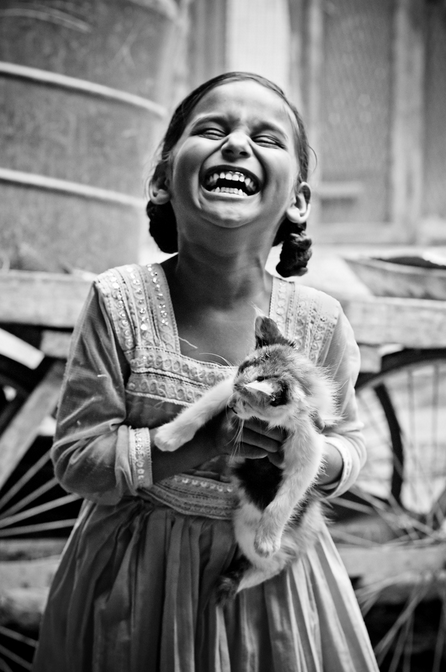
Photo source: happiness


May 10, 2013

THE POETS

Reading the beautiful poetry of Indian poet Radindranath Tagore (1861-1941….Thanks, S!) reminded me so much of another favorite [Lebanese] poet of mine: Khalil Gibran (1883-1931)! Contemporaries in age, both were distinguished by their beautiful poetry…and interestingly by their involvement in politics. Though neither would probably have considered themselves politicians…Gibran used to say, “Spare me the political events and power struggles, as the whole earth is my homeland and all men are my fellow countrymen”…Tagore was a vocal supporter of Indian Nationalism, and Gibran for Syrian Nationalism.

I am reminded so much of a quote by Nelson Mandela, For to be free is not merely to cast off one’s chains, but to live in a way that respects and enhances the freedom of others.”  I do not believe it is coincidence that after freeing their minds, these poets were involved with movements to free others.

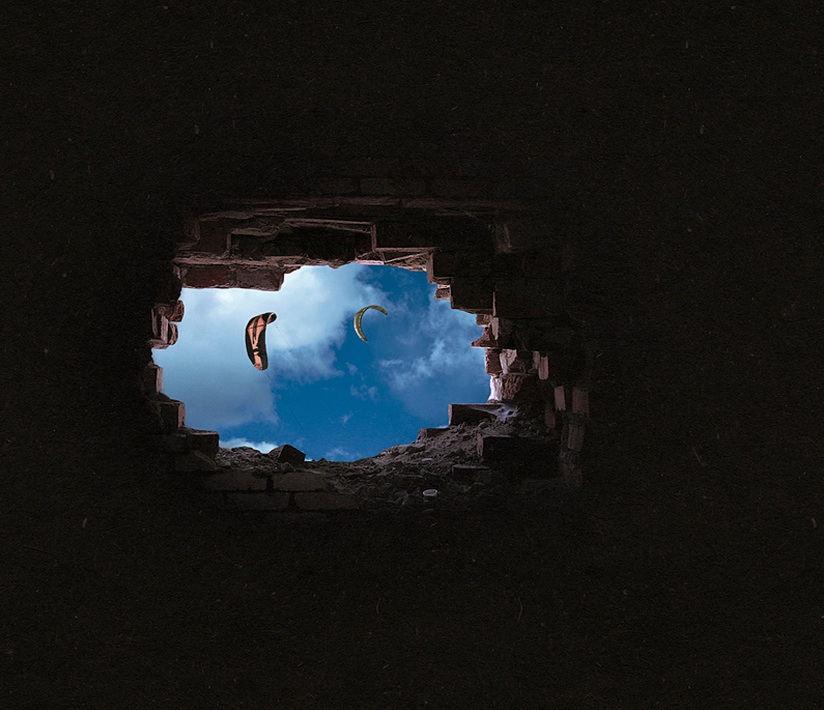
Photo source: a glimpse of freedom

May 9, 2013

WHY SO REACTIVE?

Perhaps it is the scientist in me, but recently I have conducted a few (human) reactivity experiments. They are rather simple…I say something mildly controversial that I know the person may not like and just observe how they react.  The different levels of response are amazing! The three broad categories of response I’ve found are:

  • Hurtful response
  • Clear agitation
  • Calm and cool

In the case of a “hurtful response,” the person responded to my comment very negatively, and, without significant provocation, proceeded to make comments toward me that were intended to be hurtful. No bueno.

The person who exhibited “clear agitation” tried to reign in their annoyance, but was clearly unhappy about my comments and tried to take me down the road of proving they were correct in their interpretation. (I felt this person was more likely to hold on to the annoyance and seek to prove me wrong in the future.)

It probably comes as no surprise that the responses I found most delightful were the “calm and cool” ones. Either the person let the comment roll off (with a smile!) or politely said something like, “I can appreciate you point of view…I see things a little differently, but I’d like to understand your perspective.” Wow!

This experiment was an educational experience for me to identify those traits that I most appreciated to ensure I was patterning myself in that way…and also to better recognize the types of people I am associating myself with.

After receiving the response that was intended to be hurtful, I informed that person that I did not appreciate the way they spoke to me and told them I thought it best that we not keep in touch. They continued to make further hurtful remarks…which I ignored. I also commended the person who didn’t react and they said, “ah, it was no big deal…why sweat it?” Awesome.

I admit that I felt less inclined to associate with the clearly agitated person also because they seemed to be happy when we were in agreement, but appeared to be counting each disagreement against me and bottling it up. I find the difference between holding something in and letting it fester and grow and literally not caring (and letting it go!) to be a sign of personal fortitude. The habit of holding things in often leads to a more explosive response than being immediately reactive. Both are dangerous reactions.

We have the power to control our reactions to things…especially words. Though my experiment was short, I realized that you can observe these same traits by seeing how that person treats other people (the waitress, their employee, or even their pet!). Are they continuously finding fault and reacting to things happening around them? Are they explosively reacting to minor issues and making them major? Or are they calmly letting things go and maintaining a positive outlook and level of interaction with those around them?

I decided to more consciously seek to be in the company of less reactive people who remain calm and cool in the face of petty annoyances. The emotional and physically active response is generally a sign of weakness…it takes more strength to walk away. In the words of my great krav maga trainer Brian, “The best fight is the one that never happens.”

Photo source: boiling over

May 8, 2013

A STORY ABOUT OBLIGATION

The Mulla nearly fell into a pool of water.  A man whom he knew slightly was nearby and saved him in the nick of time. Every time they met in the future, the man reminded Nasrudin about how he had saved him from getting wet.

When this had happened several times Nasrudin took him to the water, jumped in, stood with his head above the water and shouted, “Now I am as wet as I would have been if you had not saved me! Will you leave me alone?!”

-Sufi parable

Food for thought: Is it really a good deed if you keep reminding the person what you have done for them??

Photo source: jump in!

May 7, 2013

SALVADOR DALI

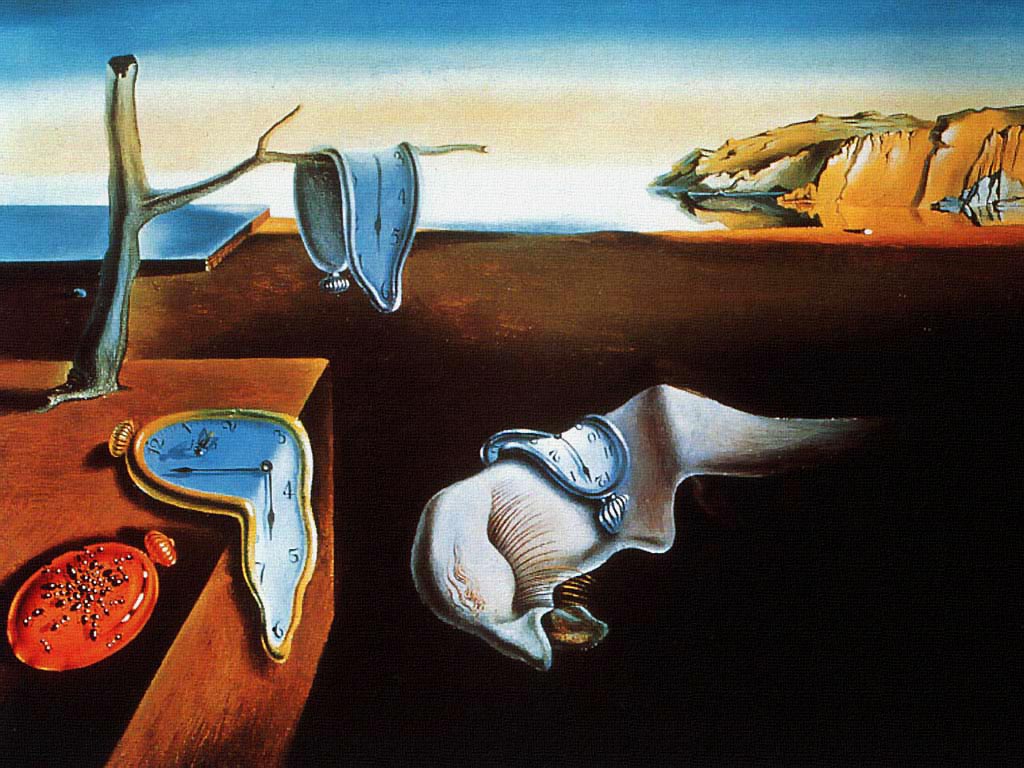
The difference between false memories and true ones is the same as for jewels: it is always the false ones that look the most real, the most brilliant.

  — Salvador Dali


Photo source: Salvador Dali’s The Persistence of Memory  (1931). For an interesting discussion on the piece, click here.

Spanish artist Salvador Dalí (1904 – 1989) was a groundbreaking icon of the Surrealist movement and one of the greatest artists of the 20th century. His work probed the unconscious world of thoughts, dreams and perception in fanciful and nightmarish images influenced by Freud, Cubism, Futurism and metaphysical art. Extraordinarily imaginative, he also sculpted, and contributed to fashion, photography and theater. Dalí’s art has been called the epitome of Surrealism.

May 6, 2013

SETTLE YOUR MIND

Do you imagine the universe is agitated?

Go into the desert at night and look out at the stars.

This practice should answer the question.

The superior person settles her mind as the universe settles the stars in the sky.

By connecting her mind with the subtle origin, she calms it.

Once calmed, it naturally expands, and ultimately her mind

becomes as vast and immeasurable as the night sky.

-Lao-tzu

Photo source: Milky Way over Bardenas desert (Spain)

May 6, 2013

BUTTERFLY DREAMS

The great Taoist master Chuang Tzu once dreamt that he was a butterfly fluttering here and there. In the dream he had no awareness of his individuality as a person. He was only a butterfly.

Suddenly, he awoke and found himself laying there, a person once again. But then he thought to himself,

“Was I before a man who dreamt about being a butterfly, or am I now a butterfly who dreams about being a man?”


-Taoist parable

Photo source: butterfly effect

Newer Posts
Older Posts
Translate »