April 13, 2013

ABODE OF THE BELOVED

Oh Companion That Abode Is Unmatched,
Where My Complete Beloved Is.

In that Place There Is No Happiness or Unhappiness,
No Truth or Untruth
Neither Sin Nor Virtue.
There Is No Day or Night, No Moon or Sun,
There Is Radiance Without Light.

There Is No Knowledge or Meditation
No Repetition of Mantra or Austerities,
Neither Speech Coming From Vedas or Books.
Doing, Not-Doing, Holding, Leaving
All These Are All Lost Too In This Place.

No Home, No Homeless, Neither Outside or Inside,
Micro and Macrocosm Are Non-Existent.
Five Elemental Constituents and the Trinity Are Both Not There
Witnessing Un-struck Shabad Sound is Also Not There.

No Root or Flower, Neither Branch or Seed,
Without a Tree Fruits are Adorning,
Primordial Om Sound, Breath-Synchronized Soham,
This and That – All Are Absent, The Breath Too Unknown

Where the Beloved Is There is Utterly Nothing
Says Kabir I Have Come To Realize.
Whoever Sees My Indicative Sign
Will Accomplish the Goal of Liberation.

April 13, 2013

THE STONECUTTER

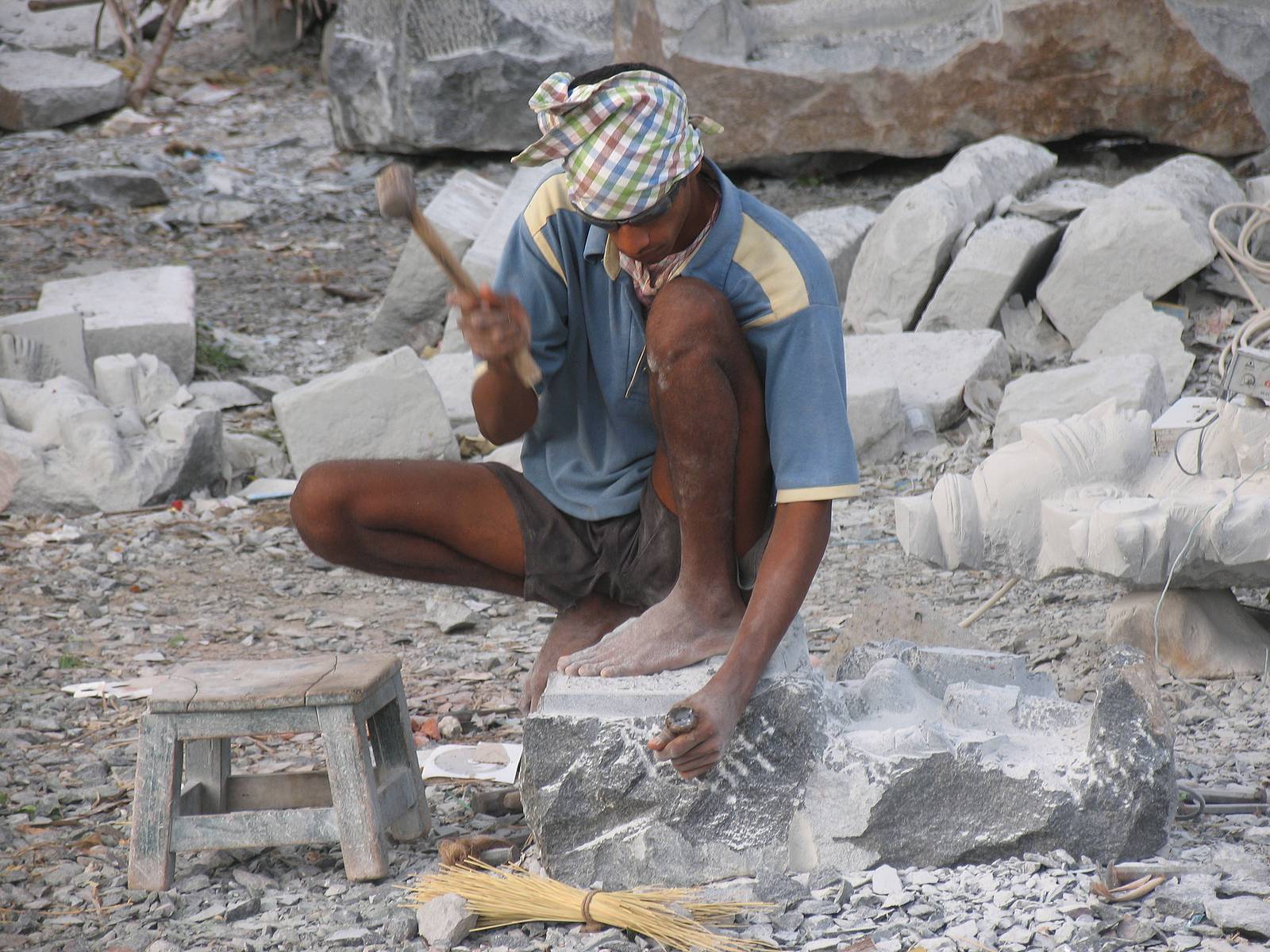
When nothing seems to help, I go look at a stonecutter hammering away at his rock perhaps a hundred times without as much as a crack showing in it. Yet at the hundred and first blow it will split in two, and I know it was not that blow that did it, but all that had gone before.” – Jacob Riis

A great friend of mine shared this excellent quote with me today (Thanks, S!) and while it speaks to the power of perseverance…it would probably not surprise this particular friend to know that it reminds of this great story also haha! (I suppose this is the by-product when one loves to read stories and parables…hopefully these shared stories are a source of inspiration for you as well!)  The story goes like this:

There was once a stone cutter who was dissatisfied with himself and with his position in life.

One day he passed a wealthy merchant’s house. Through the open gateway, he saw many fine possessions and important visitors. “How powerful that merchant must be!” thought the stone cutter. He became very envious and wished that he could be like the merchant.

To his great surprise, he suddenly became the merchant, enjoying more luxuries and power than he had ever imagined, but envied and detested by those less wealthy than himself. Soon a high official passed by, carried in a sedan chair, accompanied by attendants and escorted by soldiers beating gongs. Everyone, no matter how wealthy, had to bow low before the procession. “How powerful that official is!” he thought. “I wish that I could be a high official!”

Then he became the high official, carried everywhere in his embroidered sedan chair, feared and hated by the people all around. It was a hot summer day, so the official felt very uncomfortable in the sticky sedan chair. He looked up at the sun. It shone proudly in the sky, unaffected by his presence. “How powerful the sun is!” he thought. “I wish that I could be the sun!”

Then he became the sun, shining fiercely down on everyone, scorching the fields, cursed by the farmers and laborers. But a huge black cloud moved between him and the earth, so that his light could no longer shine on everything below. “How powerful that storm cloud is!” he thought. “I wish that I could be a cloud!”

Then he became the cloud, flooding the fields and villages, shouted at by everyone. But soon he found that he was being pushed away by some great force, and realized that it was the wind. “How powerful it is!” he thought. “I wish that I could be the wind!”

Then he became the wind, blowing tiles off the roofs of houses, uprooting trees, feared and hated by all below him. But after a while, he ran up against something that would not move, no matter how forcefully he blew against it – a huge, towering rock. “How powerful that rock is!” he thought. “I wish that I could be a rock!”

Then he became the rock, more powerful than anything else on earth. But as he stood there, he heard the sound of a hammer pounding a chisel into the hard surface, and felt himself being changed. “What could be more powerful than I, the rock?” he thought.

He looked down and saw far below him the figure of a stone cutter.

Photo source: stonecutter (India)

April 13, 2013

THE HOLY MAN

A friend of mine recently recommended a book to me called The Holy Man, which I purchased and devoured in a few sittings. It is a delightful and beautiful story filled with wisdom, wit and love centered around finding peace and happiness. I wanted to share the central theme of the book with this excerpt:

There was a holy man who lived in a hermitage on a mountain. When word got out about him, people came to see him during the summer months…first a few people, then more and more until there was a long line climbing the steep mountain path single file — tens, hundreds, and then thousands. The line moved slowly, but it moved continuously during the few hours a day he welcomed people. In fact, those who were near the head of the line and could observe were amazed by how many people he managed to see, even though they were admitted one at a time.

When the door was opened wide, the next pilgrim in line, waiting beyond the gate, would be summoned forth by a man in a wheat colored robe, a small, nondescript-looking person.

“Yes?” he would ask when the pilgrim reached the threshold.

“I have come to see the holy man.”

“Follow me, please.”

He or she would follow the small man through the house, along a hallway with doorways open to various rooms into which the pilgrim would peek hastily, but the monk ahead was moving so very quickly through the house that the pilgrim couldn’t linger but literally had to rush after him.

In no time at all they had passed through the entire first floor of the house and were at a large door similar to the one the pilgrim had entered. It was the back door. The monk opened it wide and said, “Goodbye.”

“But I have come to see the holy man!” said the visitor plaintively.

“You have seen me,” he gently replied.

And the next thing the pilgrim knew he would be outside, the door solidly closed behind him.

This is why the line moved so rapidly and how the holy man got to see so many people — or so many people got to see him.

Most times the holy man would add, “If you look on everyone you meet as a holy person, you will be happy.

Rarely, but sometimes, which were happy times for him he sat down and talked to a pilgrim…

Excerpt from The Holy Man  by Susan Trott (Note: Kindle version offers a significantly discounted price)

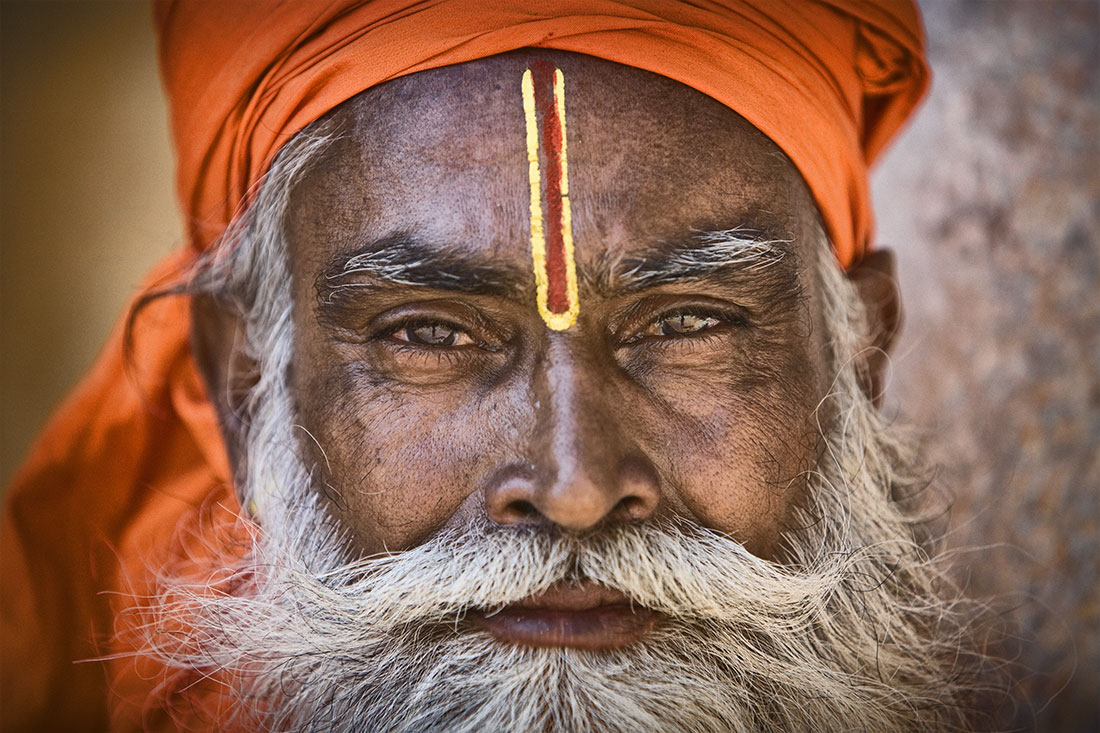
Photo source: holy man

(Thanks for the recommendation, M!)

April 13, 2013

KEEP CALM

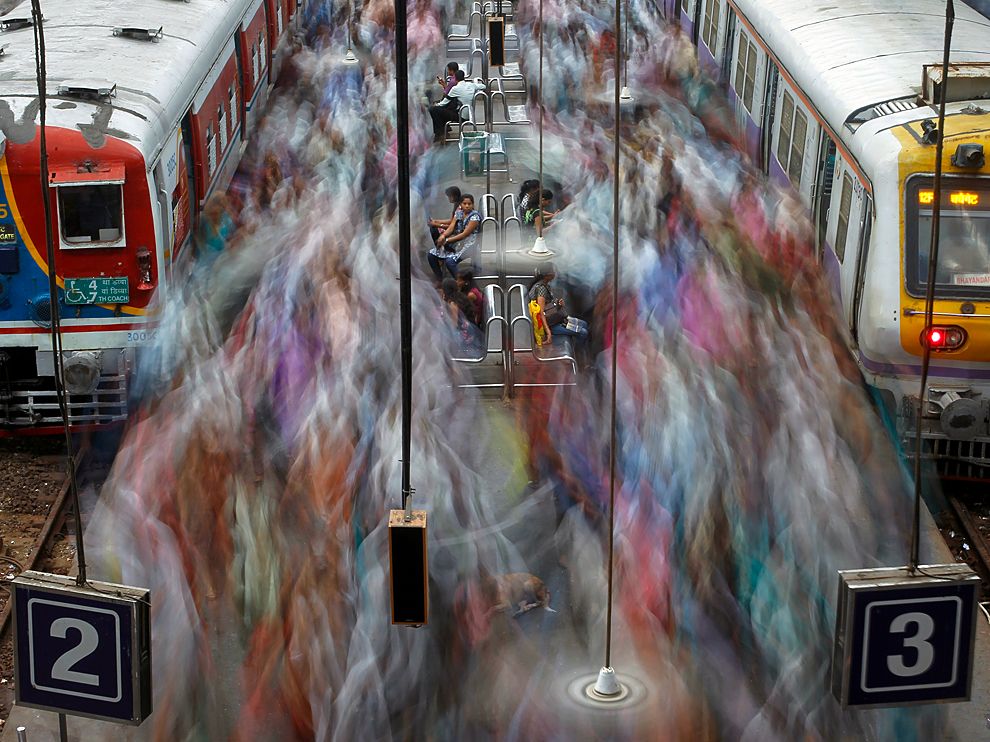
I think it’s much easier to keep one’s peace in nature (on a tranquil mountain or a beautiful sun-soaked beach) than within the chaos of city life.

However, true peace remains no matter where you are.

This reminds me very much of a poem I memorized in the 12th grade (many years ago!) for an assignment. It is called The Most Vital Thing In Life:

When you feel like saying something

that you know you will regret,

or keenly feel an insult

not quite easy to forget,

that’s the time to curb resentment,

and maintain a mental peace.

For when your mind is tranquil,

all your ill thoughts simply cease.

It is easy to be angry

when defrauded or defied,

to be peeved and disappointed

if your wishes are denied,

but to win a worthwhile battle

over selfishness and spite,

you must learn to keep strict silence

though you know you’re in the right.

So keep your mental balance

when confronted by a foe…

be it enemy in ambush

or some danger that you know.

If you are poised and tranquil

when all around is strife,

be assured that you have mastered

the most vital thing in life.

Poem by Grenville Kleiser

Photo source: Mumbai (India) train station


April 12, 2013

THE FISHERMAN AND THE BUSINESSMAN

There was once a businessman who was sitting by the beach in a small village.

As he sat, he saw a fisherman rowing a small boat towards the shore having caught quite few big fish.

The businessman was impressed and asked the fisherman, “How long does it take you to catch so many fish?”

The fisherman replied, “Oh, just a short while.”

“Then why don’t you stay longer at sea and catch even more?” The businessman was astonished.

“This is enough to feed my whole family,” the fisherman said.

The businessman then asked, “So, what do you do for the rest of the day?”

The fisherman replied, “Well, I usually wake up early in the morning, go out to sea and catch a few fish, then go back and play with my kids. In the afternoon, I take a nap with my wife, and evening comes, I join my buddies in the village for a drink — we play guitar, sing and dance throughout the night.”

The businessman offered a suggestion to the fisherman:

“I have an MBA in business management and I could help you to become a more successful person. From now on, you should spend more time at sea and try to catch as many fish as possible. When you have saved enough money, you could buy a bigger boat and catch even more fish. Soon you will be able to afford to buy more boats, set up your own company, your own production plant for canned food and distribution network. By then, you will have moved out of this village and to the city, where you can set up headquarters to manage your other branches.”

The fisherman continues, “And after that?”

The businessman laughs heartily, “After that, you can live like a king in your own house, and when the time is right, you can go public and float your shares in the Stock Exchange, and you will be rich.”

The fisherman asks, “And after that?”

The businessman says, “After that, you can finally retire, you can move to a house by the fishing village, wake up early in the morning, catch a few fish, then return home to play with kids, have a nice afternoon nap with your wife, and when evening comes, you can join your buddies for a drink, play the guitar, sing and dance throughout the night!”


Story adapted from Brazilian folklore

Photo source: spear fisherman

April 11, 2013

THE NATURE OF CHANGE

A very poor underprivileged person might think that it would be wonderful to have an automobile or television set, and should he acquire them, at the beginning would feel very happy.

Now if such happiness were something permanent, it would remain forever. But it does not, it goes. After a few months he wants to change the models. The old ones, the same objects, now cause dissatisfaction. This is the nature of change.

-Dalai Lama

Photo source: marble caves (Patagonia, Chile)

April 10, 2013

AND THEN THERE’S THIS…

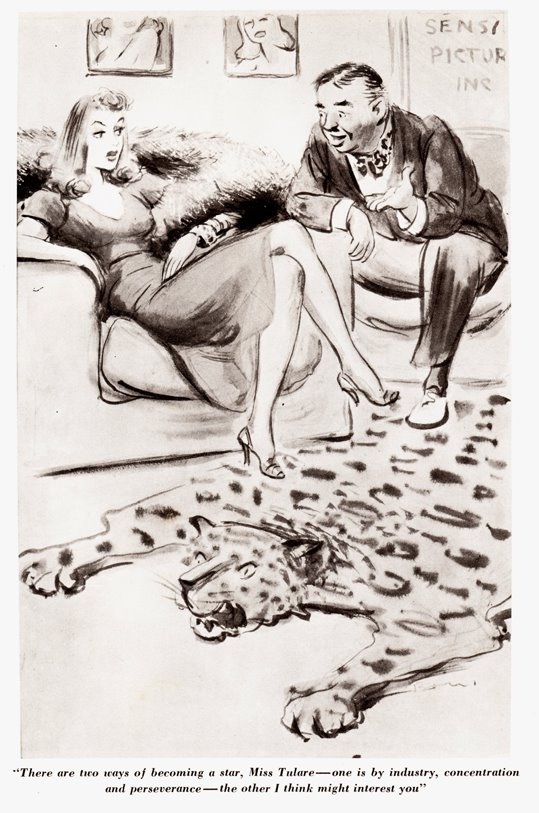
So much is said by what is not said in this image.

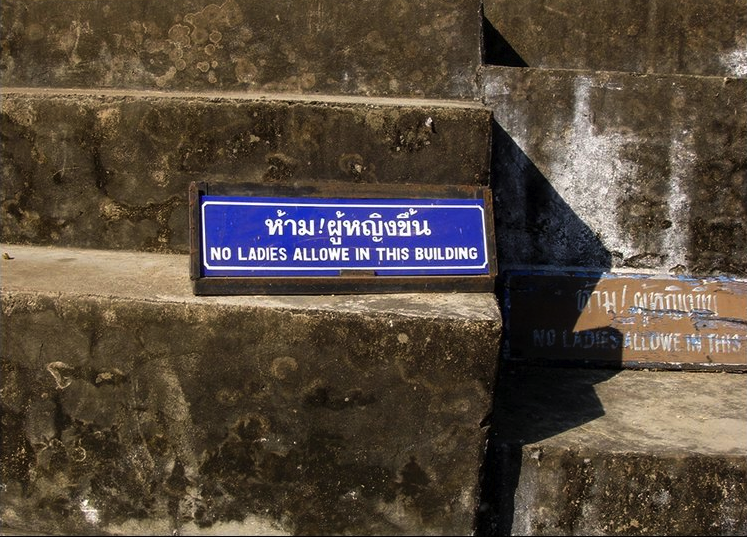
While it seems that much progress has been made regarding the rights of women, there is still sexism that happens covertly (like not receiving equal pay for equal work, or being denied opportunities due to gender). And overtly, there are still many places in the world where young girls do not receive an education (Hero: Malala)…and buildings where women are not free to enter (like here).

Sexist images in media (including TV shows, movies, and advertising) are still very prevalent and are so often geared toward a woman’s body instead of her mind. Much of this imagery has become so commonplace that many fail to notice even the most obvious sexism.

In order to be the change, why not teach young children (boys and girls) equality, love, and respect for each other? If your company is promoting advertising which objectifies women, why not voice your concerns? If other companies are objectifying women, why not withhold your (financial) support? And in all of your decision making, beware of making sweeping generalizations or decisions based solely on gender (or any other categorization for that matter).

With each person becoming more conscious, we can change the world! :)

Photo source: sexism

April 10, 2013

NO WOMEN ALLOWED

I wonder if the men who post such signs as these appreciate the sacred form of woman to which they owe their birth?

When will the world end the constant divisions and embrace our oneness?


Photo source: ‘Holy’ place (Thailand)

Newer Posts
Older Posts
Translate »